

STL to STEP, and what you really get.
Turn a closed STL into a STEP in your browser, nothing uploaded: a solid of flat faces CAD programs open. What it is, what it is not, and its limits.
By Suraj Kumar5 min read
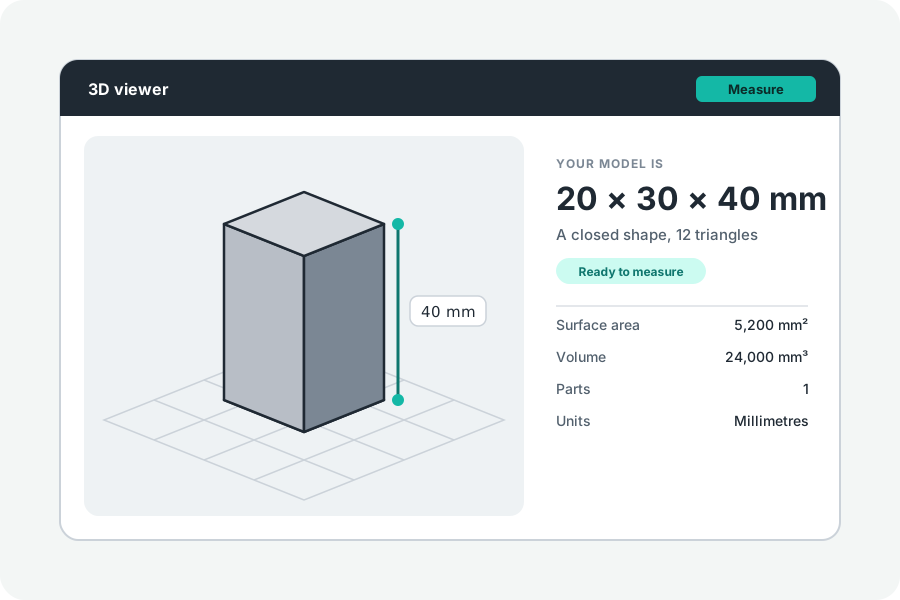
A CAD program asks for STEP, and you have an STL. KeepSimp can turn one into the other in your browser, but it is worth knowing what comes out: a solid made of the STL's own triangles, not a model with sketches and features to edit.
A solid of flat faces.
Each triangle of the STL becomes a flat face of a solid, and neighbouring faces that lie flat together are joined into one: a box comes out with six faces, not twelve. A curve stays as the facets the STL had; nothing is turned back into a true circle or cylinder.
CAD programs open it as a solid you can measure, cut and add to, but not as the features it was first drawn with, which an STL never held.
Only a closed shape.
A solid needs a closed surface: every edge shared by two faces turned the same way. The viewer measures that as soon as the file opens, and STEP is offered only for a closed shape; an open one is refused, with the number of open edges.
STEP keeps each face as text, about 2 KB of it, so a curved model grows large: STEP is written for models of up to 20,000 triangles.
How it is made and checked.
The solid is made by occt-wasm, OCCT 8 compiled to run in the browser (about 5.5 MB, downloaded from KeepSimp the first time), in millimetres. It is read back by KeepSimp's STEP reader and held to the model's size before it is offered.
Further reading
Topics: stl to step · stl to stp · convert stl to step · stl to step converter · mesh to step
A little less theory. A little more doing.
Try it on your own terms, with a free browser tool.
Try the tool